Art and China’s Revolution
Art and China’s Revolution is the latest exhibition at the Asia Society Museum in New York City. Running until Jan. 11, 2009, the exhibit focuses on the propaganda art produced in China during the so-called Great Proletarian Cultural Revolution period of 1966-1976. The exhibit displays some 250 large-scale oil paintings, sculptures, woodblock prints, ink paintings, drawings, posters, and other art objects, making it the largest and most comprehensive show of its kind. Many of the works put on view have never been seen in the United States. For those unable to visit the museum, the institution’s Art and China’s Revolution website is a somewhat informative experience.
An exhibition of this kind is naturally not without its controversies, but the most contentious aspect of the show is the fact that the Chinese Communist Party refused to loan artworks from the Cultural Revolution period to the Asia Society Museum. While the CCP attempted to censor the exhibit, works held in university collections and private hands in Hong Kong, Switzerland, and the United States, were loaned to the museum, allowing the show to go forward. Interestingly enough, the Sichaun Art Academy in China, which does not require government permission to loan works, sent part of their famous Rent Collection Courtyard sculptures to the groundbreaking New York exhibition.
The original Rent Collection Courtyard project is a masterwork of Red China’s propaganda art, it was created when China was in the throes of the Great Proletarian Cultural Revolution. Art that did not promote communism was considered counter-revolutionary and part of the “Four Olds”: old culture, old customs, old habits, and old ideas. The militant “Red Guards” of the Cultural Revolution attacked and destroyed anything connected with China’s pre-communist past.
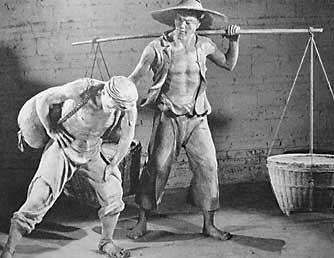
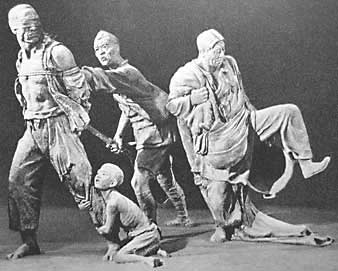
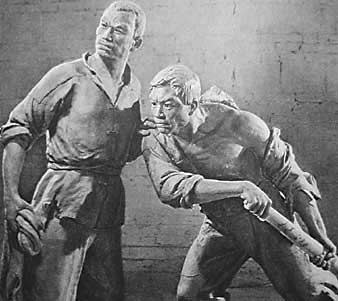
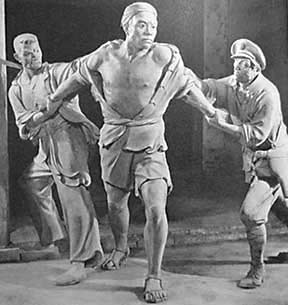
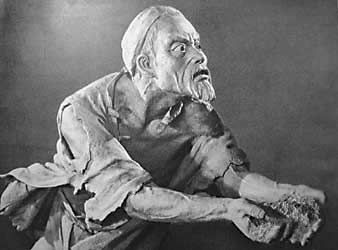
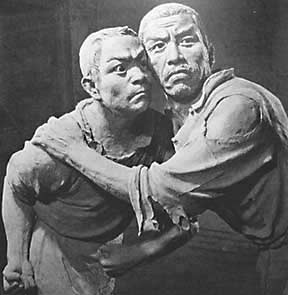
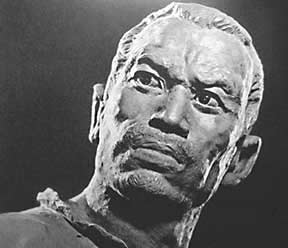
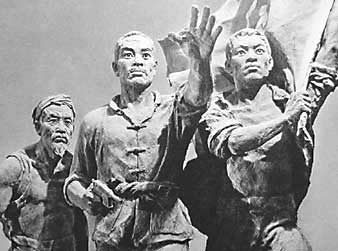
Rent Collection Courtyard was created in 1965 by a collective of 18 teachers and students from the Sichaun Art Academy. The project was comprised of 114 life-sized ceramic sculptures arranged in narrative fashion, depicting peasant farmers of Sichuan in servitude to real-life landlord, Liu Wen-tsai. Initially displayed in the actual rent collection courtyard of Liu’s vast Manor-House, the sculptures depicted the poverty and hardships suffered by peasants at the hands of Liu and how they ultimately rose up against him in communist revolution. During the Cultural Revolution the sculptures toured China, and it is estimated that they were seen by over two million people. The sculptures on loan to the Asia Society from the Sichaun Art Academy are cast in Fiberglass from the originals.
Unlike China’s communist propaganda posters of the period, the Rent Collection Courtyard sculptures are almost unknown outside of China, so I have decided to publish a few select images of the statues on this blog. Those familiar with the Stalinist “socialist realism” graphic style of China’s Cultural Revolution posters will immediately see the same aesthetics at work in the sculptures.
Over the decades I have acquired a small collection of posters, books, and periodicals from China’s Cultural Revolution period, one of my prized books being, Rent Collection Courtyard: Sculptures of Oppression and Revolt, a 1970 English language book published by China’s Foreign Languages Press. The book is heavily illustrated with photos of the sculptures as they were first displayed at the rent collection courtyard of landlord Liu’s Mansion. The images and captions that appear in this article were taken directly from this rare out-of-print, communist propaganda classic.
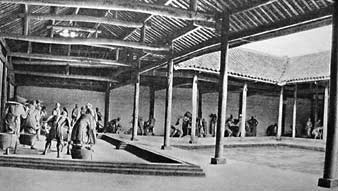
[ Rent Collection Courtyard – Collective work by the teachers and students of the Sichuan Fine Arts Institute. Ceramic sculpture. 1965. Original caption follows: “This courtyard, built especially for the collection of rent, is surrounded by a hundred-meter long corridor in which stands the clay figures. Hungry peasants had to use the back door to pay rent.” ]
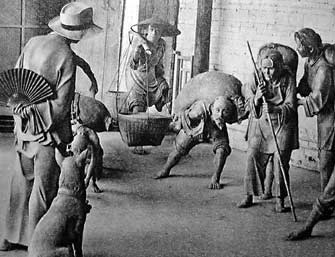
[ Rent Collection Courtyard – Collective work by the teachers and students of the Sichuan Fine Arts Institute. Ceramic sculpture. 1965. Original caption follows: “Under the cold gaze of the landlord’s stooge, the poverty-stricken peasants trudge into the courtyard carrying the grains they have toiled so bitterly for.” ]
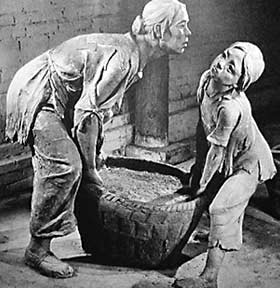
[ Rent Collection Courtyard – Collective work by the teachers and students of the Sichuan Fine Arts Institute. Ceramic sculpture. 1965. Original caption follows: “The trick winnower has reduced two full baskets of grain to one. With heavy hearts mother and daughter drag it to be measured.” ]