
| |

Frank Cieciorka: RIP
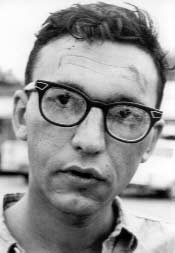
Photo of Frank Cieciorka
Cieciorka as a young Freedom Summer volunteer in Mississippi, 1964. Photo, estate of Frank Cieciorka ©.

On November 24, 2008, artist Frank Cieciorka (che-CHOR-ka) died from emphysema at the age of 69.

Starting in the 1980s he began to be recognized for his watercolor paintings of northern California landscapes, but it would be one of his early graphic art designs that assured him a place in history.

The iconic clenched fist has long been a symbol of the international left, its usage going back at least until 1917. But the symbol was transformed and revitalized in 1965 by Cieciorka, whose rendition of the pictogram struck a cord with a new generation of activists involved in the civil rights and antiwar struggles.

A New Yorker, Cieciorka came to California in 1957 to attend the arts program at San Jose State College. Upon graduation in 1964 he became a volunteer in Freedom Summer, the major civil rights campaign launched in ’64 to help African Americans register to vote in Mississippi.

That same year the Ku Klux Klan kidnapped, tortured, and murdered three Freedom Summer volunteers – James Chaney, Michael Schwerner, and Andrew Goodman. From 1964-65 Cieciorka also served as a field secretary in Mississippi and Arkansas for the Student Nonviolent Coordinating Committee (SNCC – pronounced “snick”), one of the primary civil rights organizations of the day.
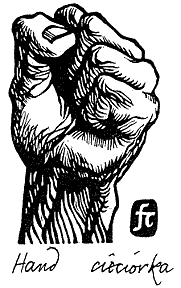
Frank Cieciorka's iconic clenched fist graphic
Hand – Frank Cieciorka. Woodcut. 1965.

Cieciorka returned to the San Francisco Bay area in 1965, and created a woodcut print inspired by his experiences as a civil rights activist in the deep South.

His image, simply titled Hand, made its way onto posters and flyers, but according to the artist, “It wasn’t until we made it into a button and tossed thousands of them into crowds at rallies and demonstrations that it really became popular.”

I wore one of Cieciorka’s buttons as a sixteen-year-old, and I still regard his woodcut print as one of the most striking symbols to have come out of the turbulent 60s.

Similar Posts

  • Chuck Close & New Realism

    In the early 1970’s I came under the influence of those artists now known as the New Realists, or Photo-Realists. At the time I was a student in art school, and there was actually very little training in the traditions of drawing, perspective, color theory and painting. My teachers were mostly in the abstract expressionist mold, and they constantly discouraged…

  • The Reign of Mediocrity

    Jack Vettriano. You’ve seen prints of his paintings everywhere, and they outsell reproductions of artworks by Van Gogh, Monet and Picasso. I first saw reproductions of Vettriano’s paintings when I visited a popular store here in Los Angeles that sells home decor items, and my immediate response was a disapproving one. The artworks are saccharine and “romantic” renditions of handsome…

  • You Weren’t Using Your Rights Anyway

    An important new opinion poll reveals that Americans know more about The Simpsons cartoon TV show than about the US Constitution. Conducted by the McCormick Tribune Freedom Museum, the poll found that only 28 percent of those surveyed could name more than one of the five freedoms guaranteed by the First Amendment to the US Constitution, while almost twice as…

  • Babylon must Fall

    The Battle for Babylon is an article written by art critic Jerry Saltz. While his article focuses on the art scene in New York, his critique is applicable almost universally. He takes the position that “more artists, gallerists, and curators are taking matters into their own hands” in an effort to circumvent the current arrangement that “reduces art to its…

  • Art in Action: El Salvador

    The International Center of Photography in New York is hosting an exhibition of wartime photographs titled: El Salvador: Work of Thirty Photographers. This important exhibit details the bloody US backed counterinsurgency war that ravaged the Central American nation, with the photos documenting the period from 1979 to 1983. Organized more than twenty years ago by photographers Susan Meiselas and Henry Mattison,…

  • | |

    Edward Hopper: A Retrospective

    Edward Hopper (1882-1967) is the subject of a major retrospective at the Art Institute of Chicago, the last venue for a traveling exhibition that included stops at the Museum of Fine Arts, Boston, and the National Gallery of Art, Washington. Encompassing nearly 100 of the artist’s most notable prints and paintings, the exhibit features some of the artist’s most iconic…